
January 21: Machinery Constantly Churning

I am one of those people who always says "I don't read as much as I used to." And it's true. In the glory days of graduate school I usually read between 2 and 5 books per week during the semester. These days I'm lucky to read more than a dozen in a year. Still, when I think about the media that really mattered to me in 2025, I can't do it without mentioning these four books. None of them were actually published last year, but they all spoke to the year we lived through in surprising and sometimes powerful ways.
Ten years ago I took my first trip across the Atlantic. My wife and I visited Dublin, Oxford, London, Paris, Avingon, and Nice in three beautiful weeks. We points-maxxed and backpacked our way across the British Isles and its southern neighbor, simmering in wide-eyed disbelief that our lives had brought us here. It was a graduation for me - within a year of that trip I'd move from grad school to my first real job, we'd buy our first house, get our first dog, and my partner would land a professorship at a small liberal arts college. It was a bright moment, auguring even brighter moments ahead.

There was this one moment though - a fly in the ointment.
It came when we woke up at our Airbnb in Oxford - a second floor room in the town home of a late middle aged empty nester. These were the old days of Airbnb, when you were more likely to have breakfast with your host than text a building manager for a code. So when we went downstairs on our first morning in England, there she was waiting with tea and scones.
We talked idly for a bit. She asked us about our studies, we asked her about the architecture, that kind of thing. Then she asked with a wry look -
You guys aren't really going to do this Trump, thing are you?
And I responded,
You guys aren't really going to do this Brexit thing, are you?
We laughed and Whit and I went about our day. We drank at the pub famous for C.S. Lewis and J.R.R. Tolkien's frequent visits. I horribly mispronounced mille-feuille at a local bakery. We followed a hedgehog for a city block as he ambled from perfectly manicured lawn to perfectly manicured lawn.
But ten years later it's the incredulous, joking questions my Airbnb host and I tossed at each other that stick. It's like looking at a broken tree limb, seeing the gnarled path it took after part of it snapped off in a windstorm.
The past is always a contested thing. History is not the settled parade of appointments and parties the schoolbooks suggested - it's a site of constant revision and reworking. All of us bringing our current worries to bear on a past we remember hazily, if we ever saw it at all. Worse still, the enormous machinery constantly churning to flatten all the past's texture, its contradictions, its losers. History is the ragged terrain of today's most desperate battles, a fact I'm reminded of as I warily eye what looks like ICE agents slow-driving down my street.
I didn't read a huge number of books last year, and only one of the four I'm sharing with you today was even published in 2025. Even so, I encountered each one as an examination of what it means to know your history and how different that is from someone else telling you what it ought to be. Two fiction, two non-fiction, all four looking at the past and saying, "there's more here we could have had."
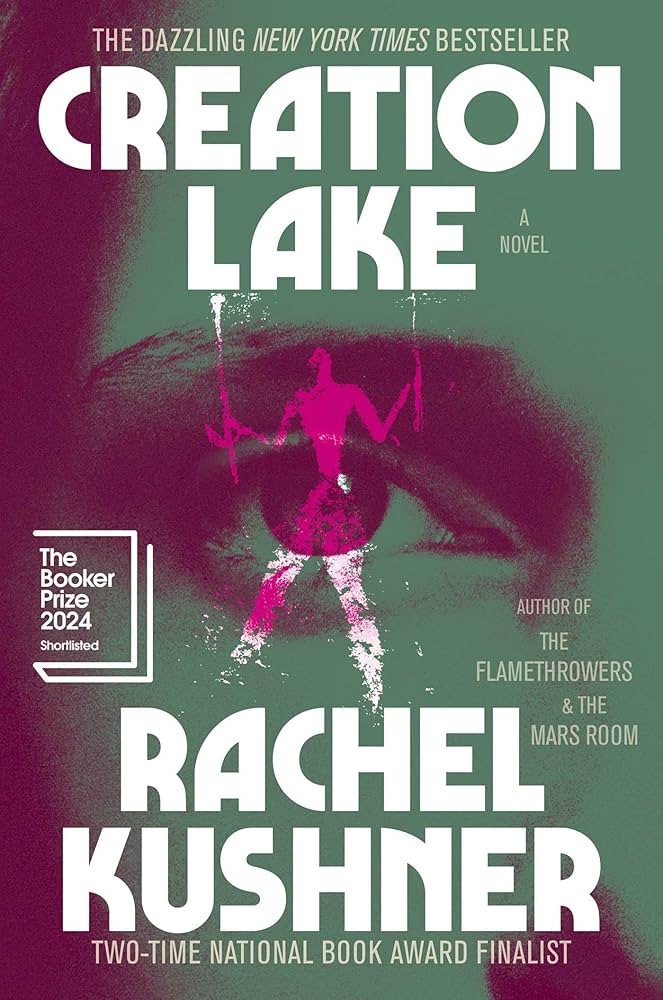
Creation Lake by Rachel Kushner
Creation Lake isn't really the easiest recommendation to make. It's an odd read. Part political espionage thriller, part meditation on neanderthal social mores, part critique of leftist communal organizing, it's a wonder this book hangs together at all. it follows Sadie Smith, an American secret agent that companies, governments, and other interested parties hire to infiltrate and sabotage socialist movements all over the world. She is a piece of work. She is also a big reason why the book manages to feel fun in spite of all the weird, esoteric material. The story unfolds in first person, sliding you into Sadie's uncomfortable headspace. She is relentlessly pragmatic. Cynical, even. But only about things that really matter. The residents of the rural French commune Sadie has been sent to dismantle feel equally like navel-gazing academics and hopeless rubes through her eyes. In fact, Sadie's perspective casts an almost Palahniuk-level misnathropy across the entire book.
But there is a heart here, or at least something like one. Sadie has regrets and the book is interested in them, just as it is interested in the kernels of utopian optimism that do genuinely underwrite the commune. Creation Lake's secret sauce is, believe it or not, the aforementioned digressions into the cultural history of neanderthals. Found in a series of correspondences from an academic supporter of the commune to its leaders that Sadie falls deeper into than she ever thought she would, it's how the book explores the power of history to set norms and, therefore, resist them. And in subtle ways it's how Creation Lake undermines the crystalline veneer worn by its protagonist, clearing the way for a finale that characterizes repressive forces as bumbling and the work of sabotage as fundamentally corrosive to even its best agents.
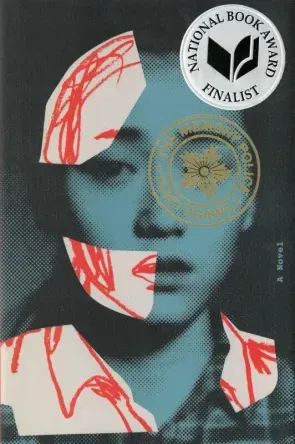
The Memory Police by Yoko Ogawa
Written in 1994 but only translated into English a few years back, The Memory Police is a deeply sad and beautiful book that, to my mind, reads a little like Franz Kafka's version of The Giver. It's dystopia with a soft, dreamy touch, all the more mournful for the its characters quietly accepting the slow bleed of their own humanity. The Memory Police follows a novelist who lives on a small island where periodically, unpredictably, things get forgotten. Calendars, flowers, perfume. No one knows why, but once a thing is forgotten there's no bringing it back.
The wrinkle here is that not everyone forgets. And so, the memory police must enforce the forgetting. When novels are forgotten, the memory police must sweep through and violently dispose of all novel-related material, black bagging the people in the process who still know what a novel is. The Memory Police is about the sinister ways we boil in our tyranny like frogs in the pot, learning to accept every new horror because we've lost the ability to imagine otherwise. It's about how the goodness required to resist starts with affection for your neighbors, family, and people - not with knowing the right theory or even having the right politics. Ogawa's novel is bleak and searing, but like a too-hot cup of tea, there's a lingering warmth too that hasn't left me since I finished it back in October.
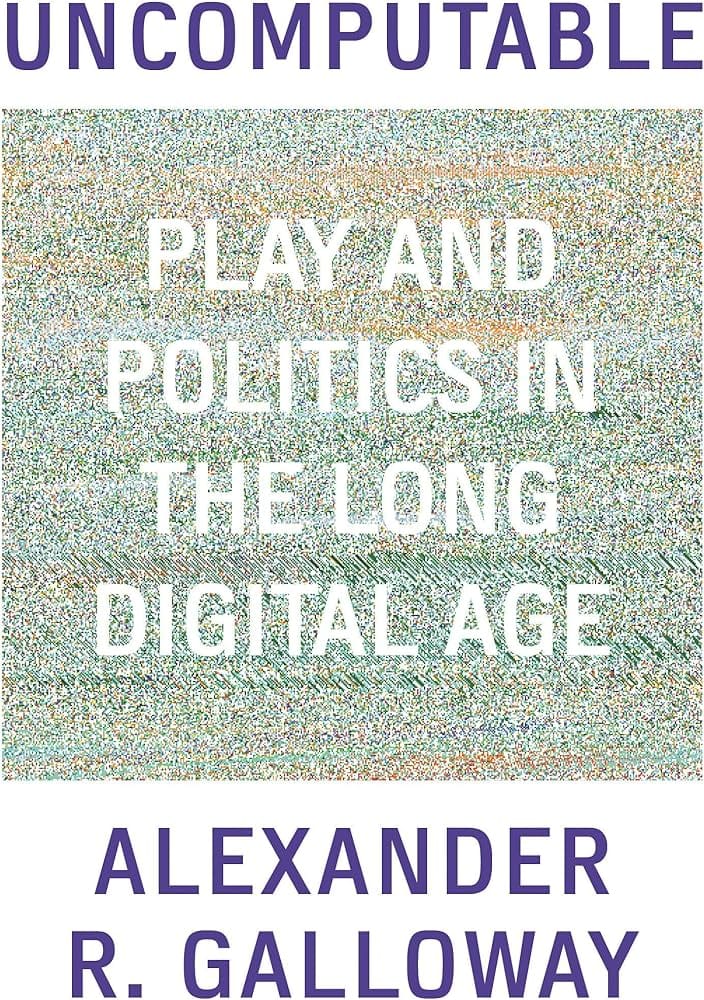
Uncomputable: Play and Politics in the Long Digital Age by Alexander Galloway
It's no exaggeration to say that Alexander Galloway's writing on video games and computation changed my life. His 2006 book Gaming: Essays On Algorithmic Culture permanently rewired my brain with respect to how I understand video games, creating the clearest blueprint for what I consider to be the practice of "close reading," but for algorithmic systems. Cue ten years of studying games as an academic.
Last year I finally caught up with his 2021 book Uncomputable - a very different sort of thing altogether. In it, Galloway explores some lesser known historical episodes about computation, a term he intentionally broadens to include things like photography and textiles in order to enrich a technological narrative that works to obscure the many contributors to contemporary digital culture that don't fit the mostly white, male, capitalist framework. It's not exactly a thrilling read - Galloway's prose is witty, but in the dense, referential way that you only find in academia. It surely won't be everyone's cup of tea. But at the very least, I'd encourage anyone with a passing interest in the history of 20th century computing to read the chapter on weaving which locates the genesis of programming on the massive factory floors of European textile production in the late 19th century. Quietly revolutionary stuff.
Everything to Play For: An Insider's Guide to How Videogames are Changing Our World by Marijam Did
I like a book that tempts me to reject it. Marijam Didžgalvytė's new book about the space video games occupy in contemporary global politics, labor markets, and resistance movements takes some big swings - the margins of my copy are filled with my own scribbled reactions to the way Did characterizes certain aspects of games and gaming culture, both cheering her on and complaining about her takes. My professional training is, basically, as a literary critic. That means that when i think about video games, the thing I'm trying to focus on the most is the "text" itself. Marjiram Did is, of course, interested in the text (i.e., the video games themselves), but not as much as she is in the cultural, economic, and political energies that surround their production and consumption. As such, her writing at times privileges the context of play over the play itself - something that fundamentally annoys me, a person who believes one of the biggest problems with games discourse is how little it tends to be about the specific qualities games bring to the table as textual objects.
However, my personal annoyances were simply fuel for the broader fire that Did sets ablaze with this book. Everything to Play For is a wake up call that play is too important to abandon to corporate overlords, oppressive extractivist capital, and anti-art Internet chuds. She writes in her conclusion:
Gaming deserves to be rescued from its self-destructive ways that poison the most visionary parts of this captivating field, to be unleashed from the thorny vines that are smothering it. Above all, this book is a love letter. It's my way of voicing all the fears ad problems I have with this relationship I have found myself in, with this medium that brings me endless joy and has brought me together with some of the most important people in my life, that has changed my class position and inspired optimism in me during the darkest of times. This relationship is marred by a sense of guilt and anger, an inability to truly champion and love this pastime, as so many parts of it are defined by well-disguised cruelty. I want to get rid of that feeling. I want for all of us to be freed from it.
That's the kind of paragraph I wish I'd written. It's the kind of revolutionary energy that our world needs right now, let alone the world of video games. And Marijam Did is the kind of writer you need to keep an eye on.
Thanks for joining me for a few weeks a catching up on 2025. Next week we'll wrap that part of the year up and start looking ahead. And double thanks for re-joining The Crossover Appeal in general as we kick off the new year. It's been a pleasure putting some words together for you all again.
See you soon.
Jordan Cassidy.



Member discussion